


Legally Reviewed By:
Brian P. Gabriel, Esquire
Legally Reviewed by Brian P. Gabriel, Esquire on July 28, 2026
Body-worn cameras do not reliably reduce police use of force. National research shows mixed results: some individual city programs report meaningful reductions in force and complaints, while a large body of study data shows no statistically significant change in officer behavior at all. For anyone facing criminal charges in Palm Beach County, understanding what body camera footage can and cannot prove is often more important than the technology’s reputation for accountability.
At the Law Office of Gabriel & Gabriel, our West Palm Beach criminal defense practice regularly reviews body-worn camera footage as part of building a client’s defense. Because the presence of a camera does not guarantee an accurate or complete record of an arrest, we look closely at when a device was activated, what it captured, and whether it supports or contradicts the official police report.
When Are Police Required to Use Body Cameras?
Body-worn cameras did not become common law enforcement equipment until relatively recently. Adoption accelerated after the death of Michael Brown in 2014, when the Obama administration directed federal funding toward local police departments that wanted to purchase the devices. By 2023, approximately 82% of U.S. law enforcement agencies had deployed body-worn cameras, a significant increase from 47% in 2016.
Federal policy has followed the same trajectory. In May 2023, the Department of Homeland Security (DHS) announced its first department-wide policy requiring body-worn cameras (BWCs) for its law enforcement officers and agents, aligning with President Biden’s Executive Order on Advancing Effective, Accountable Policing and Criminal Justice Practices to Enhance Public Trust and Public Safety. The Department of Justice has similarly required federal agencies to equip officers with BWCs during pre-planned arrests and the execution of search warrants. Agencies that adopted the technology generally cited a handful of consistent goals, according to a study on body-worn camera acquisition:
- Officer safety: reducing the risk of violent confrontations by documenting encounters as they happen.
- Evidence quality: capturing audio and video that can corroborate or challenge witness and officer accounts.
- Civilian complaints: giving both officers and the public a shared record to help resolve disputes.
- Agency liability: limiting exposure to claims by documenting how officers actually behaved.
Deployment data from the same period shows how uneven adoption has been across agency types. About 60% of local police departments and 49% of sheriff’s offices that had acquired body-worn cameras reported having fully deployed them agency-wide, while roughly 86% of agencies that acquired the equipment had adopted a formal body-worn camera policy to govern its use. That gap between owning cameras, deploying them fully, and having a clear activation policy helps explain why body camera footage is not always available or consistent from one arrest to the next.
Despite these goals, having a camera present does not automatically mean it changes how an interaction unfolds, and the technology’s reputation for accountability has outpaced what the research actually shows.
What Does the Research Say About Body Cameras and Police Use of Force?
Much of the public assumes that officers wearing cameras will use less force, reserving physical intervention for situations that truly require it. The evidence does not support this assumption as clearly as many people expect.
In Washington, D.C., researchers ran a randomized controlled experiment from 2015 to 2016 in which half of the officers in the Metropolitan Police Department used a body camera for seven months while the other half went without one. David Yokum, the lead scientist on the study, reported:
“The top-line results that we found were that there weren’t any meaningful, detectable effects on the likelihood of force used or the rates of complaints that we were seeing.”
That finding is not an outlier. According to a comprehensive review of 70 body-worn camera studies published by the National Institute of Justice, research on use of force, arrests, traffic stops, and stop-and-frisk encounters shows no consistent or statistically significant pattern across most agencies studied. In other words, whether a camera changes an officer’s behavior in a given department can depend heavily on that agency’s policies, training, and how the footage is actually reviewed after an incident.
Use of Body-Worn Cameras in Hallandale Beach
Local data reflects this same uncertainty. An assistant professor of public affairs at The Ohio State University who studies police-community relationships examined body-worn camera use in Hallandale Beach and found no results of statistical significance. There were some non-statistically significant trends in the data, including the fact that officers wearing cameras issued more citations than those who did not.
Other researchers, however, found that in the majority of the studies they reviewed, the use of body cameras reduced the number of complaints filed against officers. This suggests that the presence of a camera may discourage baseless claims against individual officers, even when it does not clearly reduce the use of force itself.
How City and County Body Camera Programs Have Performed
Program-by-program results vary even more once individual evaluations are considered on their own. In Boston, an evaluation found statistically significant reductions in both citizen complaints and use-of-force reports among officers who wore cameras, a result strong enough to earn an Effective rating from the Department of Justice’s CrimeSolutions database. In Rialto, California, and Las Vegas, Nevada, separate evaluations found statistically significant reductions in police use of force, and the Las Vegas study also showed a reduction in complaints. In Birmingham, England, researchers found a significant reduction in citizen injury but no significant change in officer use of force. A separate multi-agency study of departments across the country found statistically significant decreases in fatal police-citizen encounters after three years among agencies that had acquired body-worn cameras, though that same study found no significant difference when comparing a smaller, matched set of agencies with and without cameras.
These differences illustrate why body-worn camera research is described as mixed rather than conclusive. A department’s activation policy, training, camera placement, and how footage is reviewed after an incident all appear to matter as much as whether officers are wearing the equipment at all. For someone facing criminal charges, this means the existence of a body-worn camera program at a department does not guarantee that clear, usable footage exists in any specific case.
When Body Camera Footage Fails to Tell the Full Story
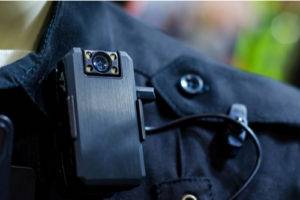
Even when a body-worn camera is issued and functioning, it does not necessarily capture everything relevant to an arrest. Officers wear the devices on their chests or uniforms and generally control when the cameras are turned on and off throughout a shift. Some interactions never trigger activation at all, particularly informal or unplanned encounters with the public.
Technical limitations add another layer of uncertainty. Battery life, storage capacity, connectivity, and equipment maintenance can all affect whether footage exists, is complete, or is preserved long enough to matter later. The technology has been described as a tool that could strengthen police transparency and accountability, yet the footage these devices capture does not always surface in a way that is useful to the public or to a defendant.
Storage and retention policies create further gaps. Agencies typically set schedules for how long footage is kept before it is deleted or overwritten, and footage that is not flagged for preservation early in a case can be lost before an attorney ever has a chance to review it. In some instances, agencies may also redact or withhold portions of a recording during the discovery process, which is why a defense team needs to know what to request and when to request it.
For these reasons, the existence of a body-worn camera policy at a department is not the same thing as having reliable, complete footage of a specific arrest.
Can Body-Worn Camera Footage Help My Criminal Case?
When body-worn cameras are used correctly, the footage they capture can be valuable to a criminal defense. These devices record audio and video of interactions between officers and members of the public, creating a record that can be reviewed alongside the official police report.
Footage can sometimes show that an officer’s written account does not match what actually happened, particularly around the sequence of events leading up to an arrest or a claimed act of resistance. It can also reveal gaps in an investigation, such as evidence that was overlooked or mishandled. In cases where an officer is later accused of obstruction of justice or acting outside department policy, footage that contradicts the officer’s version of events can carry significant weight.
Chain of custody matters as well. Footage needs to be preserved, logged, and produced in a form that can be authenticated in court, and any gap in that process, such as a delay in preservation or an unexplained edit, can raise questions about the reliability of the recording. Requesting footage as early as possible in the discovery process gives a defense team the best chance of reviewing it before it is altered or lost.
Just as important, footage that is missing, was never activated, or has been lost can itself become an issue in a case. Our team reviews the availability and quality of body-worn camera evidence in the criminal defense matters we handle, alongside the broader question of what evidence exists to build a defense.
Your Rights When Body Camera Evidence Is Missing or Incomplete
If you have been arrested and body-worn camera footage exists, you may have the right to request that it be preserved and reviewed as part of your defense, whether the footage supports your account of events or raises questions about how the arrest was handled. An attorney can help identify what footage should exist, request it through the proper channels, and evaluate whether it was collected, stored, and disclosed the way department policy requires.
This matters most in cases involving violent crime allegations, felony charges, or any situation where an officer’s account of your conduct will be central to the prosecution’s case. Reviewing footage early, before it is lost to standard data retention schedules, can make a meaningful difference in how a case is prepared and defended.
Receive Quality Criminal Defense in West Palm Beach
Attorney Brian P. Gabriel has represented people facing criminal charges in Palm Beach County for more than 30 years. He began his career as an Assistant State Attorney in West Palm Beach before founding a private practice focused on criminal defense, and he brings that background to cases involving police conduct, use-of-force allegations, and the evidence collected during an arrest, including body-worn camera footage.
If you were arrested in Palm Beach County and have questions about body camera evidence, police conduct, or the charges against you, our team at the Law Office of Gabriel & Gabriel can review the details of your case and explain your options for a free consultation. To get started, complete a contact form.
Frequently Asked Questions About Body Cameras and Police Use of Force
Do Police Body Cameras Actually Reduce the Use of Force?
National research on this question is mixed. Some individual programs, including evaluations in Boston, Rialto, and Las Vegas, found statistically significant reductions in use of force among officers wearing cameras. However, a broader review of seventy body-worn camera studies published by the National Institute of Justice found no consistent or statistically significant effect across most agencies studied. In practice, the outcome tends to depend on the department’s policies, training, and how footage is reviewed after an incident rather than on the cameras themselves.
Are Police Officers Required to Keep Their Body Cameras On at All Times?
No. Most departments give officers discretion over when to activate their cameras, and many policies exempt certain situations, such as conversations with confidential informants or activity protected under the First Amendment. Because officers generally control activation, some encounters are never recorded, and battery life, storage limits, and equipment malfunctions can also affect whether footage exists. This is one reason a body camera program does not guarantee that footage of a specific arrest will be available.
What Happens if Body Camera Footage Is Missing or Was Never Recorded in My Case?
If footage that should exist is missing, unclear, or was never recorded, that gap can become an important issue in a criminal case. An attorney can help determine what footage should have been captured under department policy, request preservation of any existing recordings before they are deleted under standard retention schedules, and examine whether the absence of footage affects the reliability of the officer’s account of events.
Can Body-Worn Camera Footage Help My Criminal Defense?
Footage can support a defense in several ways. It may show that an officer’s written report does not match what the video and audio actually capture, particularly regarding the sequence of events before an arrest. It can also help reveal whether evidence was handled properly and whether a claimed act of resistance or aggression is consistent with what the recording shows. Reviewing this footage early is often an important part of preparing a criminal defense.
How Do I Find Out if Body Camera Footage Exists in My Case?
The arresting agency’s records, the police report, and the case file typically indicate whether an officer was wearing an active body camera during the encounter. An attorney can request this information directly from the department and, where footage exists, seek to have it preserved and produced as part of the discovery process in your criminal case.
About the Attorney
Founding Attorney, Law Office of Gabriel & Gabriel
Brian P. Gabriel has practiced criminal defense in Palm Beach County for more than 30 years. He began his legal career as an Assistant State Attorney in West Palm Beach before founding his own criminal defense practice in 1995, and his work today focuses on defending clients against a wide range of criminal charges throughout Palm Beach County.


