




Legally Reviewed By:
Brian P. Gabriel, Esquire
Voyeurism
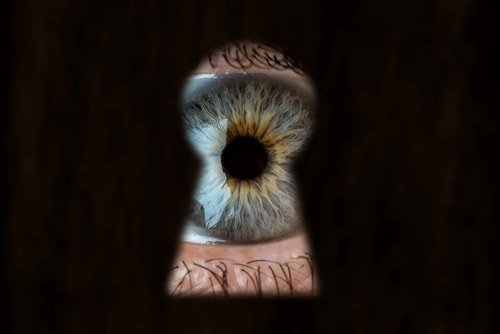 What may seem like a harmless action on the part of curious adolescents is a serious criminal offense in Florida that can lead to time behind bars. Voyeurism is the act of observing someone in an intimate situation without their knowing, with lewd, lascivious, or indecent intent. A typical scenario is one in which a person is in her bedroom undressing. A voyeur, or “peeping Tom,” idly watches from behind a bush or other object that hides his presence. A person undressing or involved in some other intimate act within their own home is entitled to expect privacy in that setting.
The Florida statute on Voyeurism (810.14) prohibits a person from looking into another’s dwelling, structure, or conveyance or from looking at a person’s intimate areas that are protected by clothing. “Intimate areas” under the law are parts of the body or undergarments that are covered and intended to be hidden from public view.
Voyeurism is a first-degree misdemeanor sex crime. Those accused of voyeurism can stain their clean criminal histories and reputations. Aside from receiving the embarrassing nickname “Peeping Tom,” they can spend up to a year in jail and/ or a year serving probation. They may also be subjected to paying a fine of up to $1,000.00.
Voyeurism Defense Lawyer in West Palm Beach
To prove voyeurism, the prosecution must show that the defendant observed intimate activity secretly, with lewd, lascivious or indecent intent in a place where the victim had a reasonable expectation of privacy. The expectation of privacy is the main element the court must prove. The defendant must have gone out of his way to sneak up and spy on the victim to observe intimate activity within the dwelling.
The statute does not apply to staring at others in public. A person cannot accuse another of voyeurism if she wears revealing clothing and another looks at the parts of her body that are exposed. The statute only protects areas of the body that are hidden by clothing. A woman who bathes topless on a public beach also does not have the expectation of privacy.
A West Palm Beach voyeurism defense lawyer like Brian Gabriel understands that many actions can be mistaken for voyeurism. There are several instances in which people have mistakenly witnessed intimate activity occurring within a dwelling. Each situation is unique and must be handled as such.
For over 30 years, Mr. Gabriel has served his community providing comprehensive criminal defense. His reputation is the result of determination and results-driven efforts. Call The Law Office of Gabriel & Gabriel at 561-622-5575 or contact us online for a free and confidential consultation.

Brian Gabriel is the driving force behind the Law Office of Gabriel & Gabriel. He has been in practice for over 30 years and his experience during that time has been devoted almost exclusively to the defense of criminal cases.
March 5, 2025