


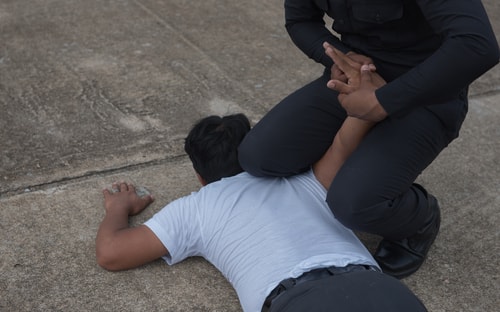
 By Florida law, any act of obstructing, opposing, or resisting a police officer engaged in lawful conduct is a crime. To resist arrest without violence is a misdemeanor crime. When there is violence toward the officer, the crime is classified as a violent felony. If you have been arrested for resisting arrest in Palm Beach County, you need a strong criminal defense attorney on your side to reduce charges or attempt to have your case completely dismissed.
Resisting Arrest or Resisting an Officer without Violence is a first-degree misdemeanor for which a defendant can face strict penalties. The crime is defined by Section 843.02 of the Florida Statutes. It is usually included as an add-on charge along with other charges, which increases the chances of a defendant facing a conviction for any of the crimes he or she has been charged with. Ultimately, to prove this offense, the prosecution must prove the following elements beyond a reasonable doubt:
- The defendant resisted, obstructed, or opposed a law enforcement officer
- The officer was engaged in executing a legal process or duty
- The officer was legally authorized to execute the process or duty
- At the time, the defendant knew he or she was resisting a law enforcement officer, or someone who is legally authorized to execute the process or duty
Small actions of almost any kind can be interpreted as resistance. Things like tensing your arms when being handcuffed or refusing to obey verbal commands can persuade the arresting officer to add charges for resisting arrest without violence. Refusing to stand or place your hands behind your back, providing false information, or presenting an invalid ID are all considered acts of resisting arrest without violence. Hiding evidence can also prompt charges.
Penalties for Resistance Without Violence in West Palm Beach
A first-degree misdemeanor crime means you can face up to a year in jail or up to 12 months of probation and a fine of up to $1,000. For a first-time offense, a conviction for resisting without violence will result in a permanent criminal record. Aggravated factors such as disrespectful conduct can worsen the sentence if convicted.
Resisting Arrest or an Officer with Violence
The crime of resisting arrest with violence (Section 843.01) is a third-degree felony by Florida law, for which you face a maximum sentence of 5 years in a state prison or 5 years of probation, and a $5,000 fine. To prove this offense, the prosecution must be able to demonstrate the following beyond a reasonable doubt:
- The defendant knowingly and willfully resisted, obstructed, or opposed the alleged victim by offering or doing violence toward him or her
- The alleged victim was an officer or a person legally engaged in the execution of a legal process or the lawful execution of a legal duty
- At the time of the offense, the alleged victim was an officer or person legally authorized to engage in the execution of a legal process or duty
- The defendant knew at the time that the alleged victim was legally authorized to execute such processes or duties
Resisting with violence may also lead to additional charges for battery on a law enforcement officer or obstruction of justice, which carry their own penalties and consequences.
How to Get a Resisting Arrest Charge Dropped in Palm Beach County
A defendant may have several reasons as to why he or she resisted arrest. Oftentimes, the arrest itself is unlawful. If the underlying arrest was not supported by probable cause, the resisting charge may not stand. Other common defenses include lack of knowledge that the person was a law enforcement officer, self-defense against excessive force, or a case of mistaken identity.
Criminal Defense Attorney Brian Gabriel leads criminal defense in Palm Beach County with over 30 years of experience representing clients facing misdemeanor and felony charges. Mr. Gabriel will handle your case using all the knowledge and skills developed over the span of his career. If you face charges for resisting a police officer, there are several defenses that can be raised. Immediately after an arrest, evidence must be preserved to build a strong case.
Start with a free consultation today by calling Criminal Defense Attorney Brian Gabriel of The Law Office of Gabriel & Gabriel at (561) 622-5575. You can also complete an online contact form to learn more.